Why dividend reporting starts long before tax season
Reporting season does not create dividend reporting problems. It exposes them.
By the time a finance team begins preparing Forms 1099-DIV, every dividend has already been declared, every ownership change has already occurred, and every missing W-9, outdated mailing address, or incomplete shareholder record has already become part of the reporting process.
The remaining question is whether those records were maintained consistently throughout the year or whether someone now has to reconstruct months of ownership activity before filing deadlines arrive.
That is why organizations with nearly identical shareholder bases can have completely different reporting experiences. One company confirms its records and prepares forms in a matter of days. Another spends weeks comparing spreadsheets, searching email threads, requesting updated tax documentation, validating addresses, and resolving ownership discrepancies.
Form 1099-DIV is also one of several ownership processes that draw from the same underlying records. Dividend payments, shareholder communications, Proxy Voting, ownership transfers, board reporting, and Document Distribution all depend on complete and current shareholder data.
When those records are reliable, downstream work becomes easier. When they are fragmented across spreadsheets, accounting systems, shared drives, and institutional knowledge, each process requires its own reconciliation. Dividend reporting is simply the moment when those weaknesses become difficult to ignore.
What is Form 1099-DIV?
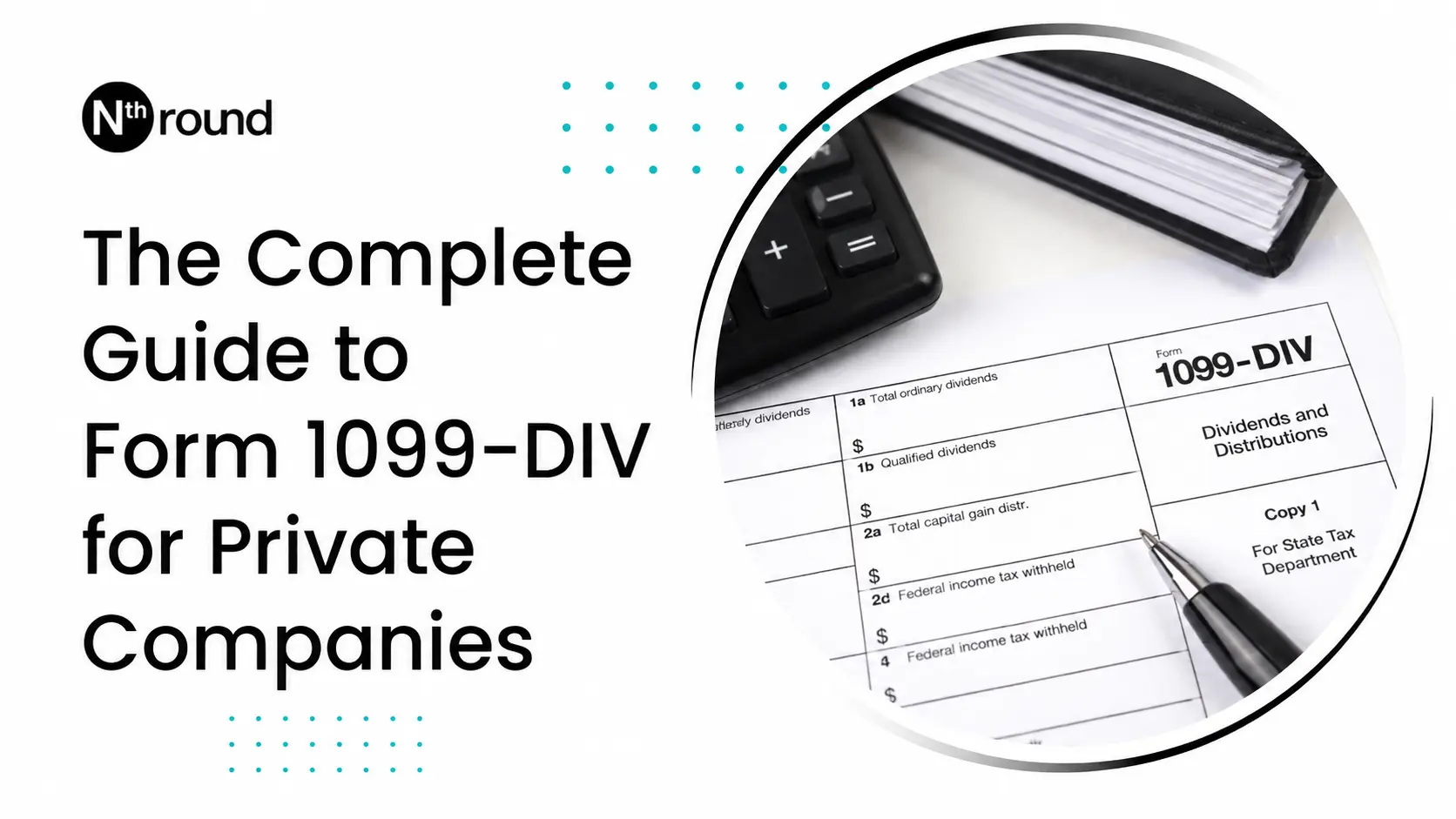
Form 1099-DIV is an informational tax form used to report dividends and certain other distributions paid to shareholders during the tax year.
Organizations that make reportable distributions may be responsible for providing the form to eligible recipients and filing the corresponding information with the Internal Revenue Service. The form gives shareholders the information they need to report dividend income and gives the IRS a record of those payments.
The form itself is relatively straightforward. Preparing it accurately depends on information that should already exist before reporting season begins, including:
· Complete shareholder identities and legal ownership information
· Taxpayer identification information and current W-9 documentation
· Current mailing and contact information
· Dividend payment and distribution history
· Ownership balances and transaction history
· Supporting records for ownership changes and reportable distributions
None of this information is created during reporting season. It is accumulated through shareholder onboarding, ownership administration, dividend processing, and routine record maintenance throughout the year.
What information appears on Form 1099-DIV?
The specific boxes used depend on the distributions made during the year. Form 1099-DIV commonly includes the payer and recipient information, total ordinary dividends, qualified dividends, capital gain distributions when applicable, nondividend distributions, federal income tax withheld when applicable, and state reporting information when required.
Each reported amount must connect to the organization’s distribution records and the correct recipient. That connection is where operational quality matters. A calculation can be correct and still produce the wrong form if the ownership record, legal name, taxpayer information, or distribution allocation is wrong.
For private companies, the practical task is not simply filling boxes. It is proving that the person or entity named on the form was the correct recipient and that the amount reported is supported by the company’s records.
Why Form 1099-DIV is really a data quality test
At first glance, Form 1099-DIV looks like a tax reporting requirement. In practice, it tests the quality of the shareholder data behind the form.
By the time reporting season arrives, most organizations already understand what needs to be reported. The difficulty is having complete, current, and consistent information available when it is needed.
A shareholder updates a mailing address, but only one spreadsheet is changed. A W-9 is requested but never returned. An ownership transfer is approved but never reflected in the shareholder register. Finance, legal, and accounting each maintain a different version of the ownership records. A trust changes its legal name, but historical records continue to use the old name.
Each issue may appear minor on its own. Together, they determine whether preparing Forms 1099-DIV is a controlled reporting process or a prolonged reconciliation exercise.
Where shareholder data starts to break down
Missing or outdated tax documentation
Missing W-9s and outdated taxpayer information create work at the least convenient point in the reporting cycle. Finance teams begin sending reminders, confirming legal names, and resolving identification issues while forms are already being prepared.
The work is usually avoidable. Tax documentation is easier to collect during shareholder onboarding, after a legal-name change, or when an ownership event occurs. A process that waits until reporting season turns routine maintenance into urgent follow-up.
Incomplete shareholder information
Outdated mailing addresses, legal names, entity classifications, and contact details can result in returned mail, delayed delivery, shareholder questions, and corrected forms. The reporting team may have accurate dividend amounts but still lack the recipient information needed to deliver the form correctly.
Ownership changes that were never fully recorded
Every share issuance, transfer, redemption, trust restructuring, and estate settlement can affect future reporting. When those events are approved but not reflected promptly in the shareholder register, the reporting team is left reconstructing ownership history months later.
Reconstruction often requires reviewing email approvals, board materials, legal documents, payment files, and historical spreadsheets. The cost is measured in staff time, legal review, manual reconciliation, and uncertainty about which record should control.
Duplicate and inconsistent records
Duplicate shareholder profiles often begin as practical workarounds. A trust appears under a shortened name in one system and its full legal name in another. An individual and the individual’s estate are treated as the same record. A shareholder is entered twice after a change of address.
Those records may look harmless until dividend payments and tax forms must be matched to one recipient. Standardized naming, entity identifiers, and documented ownership history reduce the likelihood that the same shareholder will be treated as two different recipients or that two recipients will be treated as one.
Multiple sources of truth
Perhaps the most common problem is not missing data. It is conflicting data. Finance maintains one spreadsheet. Legal maintains another. Accounting tracks distributions separately. Historical ownership records live somewhere else.
Each source may be accurate for its original purpose. Reporting requires all of them to agree. When they do not, the team must determine which record is authoritative before it can prepare the forms.
Institutional knowledge
Many organizations also rely on one person who knows where everything is. That person remembers which spreadsheet is current, how prior distributions were calculated, and which shareholder records require special handling.
Experience is valuable. A process that exists mainly in one person’s memory is fragile. Reporting should remain repeatable when an employee is unavailable, changes roles, or leaves the organization.
Every ownership process depends on the same records
Form 1099-DIV does not operate as a standalone workflow. The same records used for dividend reporting also support other ownership activities throughout the year.
When one record changes, every process that depends on it may need to change as well. A transfer that is missing from the shareholder register can affect dividend allocations, voting rights, communications, board reporting, and future transactions.
Who receives Form 1099-DIV?
Form 1099-DIV is generally provided to recipients who receive reportable dividends or other qualifying distributions during the tax year. Depending on the facts, recipients may include individual shareholders, joint account holders, trusts, estates, and certain entities.
The reporting obligation depends on the nature and amount of the distribution, the recipient, and current IRS rules. Private companies should confirm their specific obligations with qualified tax professionals and the current Form 1099-DIV instructions.
Operationally, the company still needs a reliable recipient record even when a particular distribution does not ultimately require a form. Accurate legal names, taxpayer information, entity status, and delivery details support the determination and make the reporting process defensible.
When does a private company issue Form 1099-DIV?
A private company may need to issue Form 1099-DIV when it makes reportable dividend or distribution payments during the tax year. These can include cash dividends, certain capital gain distributions, nondividend distributions, and other amounts covered by IRS reporting requirements.
The filing calendar includes recipient delivery and IRS filing requirements, and deadlines can vary based on the filing method and current-year instructions. Companies should build an internal calendar that allows time for record validation, management review, correction of missing information, recipient delivery, and filing.
A filing deadline is not an appropriate starting date. Internal review should begin early enough that missing documentation can be resolved without compressing the entire process into the final days before submission.
Ordinary and qualified dividends require accurate classification
Ordinary dividends are generally distributions paid from a corporation’s earnings and profits. Qualified dividends are a subset of ordinary dividends that may receive preferential tax treatment when applicable IRS requirements are satisfied.
For shareholders, the classification can affect the tax treatment of the income. For the company, the operational requirement is to maintain records that support how the distribution was classified and what amount was reported in each applicable box.
The classification decision should be made with appropriate tax advice. The ownership administration team’s responsibility is to ensure that the approved classification, recipient information, and distribution amounts flow consistently into reporting.
Form 1099-DIV and Schedule K-1 serve different purposes
Form 1099-DIV generally reports dividends and certain distributions paid by corporations. Schedule K-1 reports an owner’s or beneficiary’s share of income, deductions, credits, and other tax items from pass-through entities such as partnerships, S corporations, estates, and trusts.
The two forms are not interchangeable. The appropriate form follows the entity’s tax treatment and the nature of the amount being reported.
They do share an operational dependency: accurate ownership records. Whether the organization is allocating pass-through tax items or reporting corporate distributions, it needs to know who held the relevant interest, how ownership changed, and which legal and tax information belongs to each recipient.
What a year-round reporting process looks like
Organizations with reliable reporting processes do not necessarily have simple ownership structures. Many manage multiple share classes, trusts, estate transfers, employee ownership programs, and recurring distributions. What separates them is consistency.
They treat shareholder administration as an ongoing responsibility rather than an annual cleanup project. Ownership changes are recorded when they occur. Shareholder information is updated when changes are received. Supporting documents remain connected to transactions. Tax documentation is collected before it becomes urgent.
During shareholder onboarding
· Capture the shareholder’s complete legal name and entity type.
· Collect and review required tax documentation.
· Confirm mailing, email, and payment information.
· Establish the correct ownership account and connect supporting documents.
· Document responsibility for future updates.
When ownership changes
· Record issuances, transfers, redemptions, and estate-related changes promptly.
· Retain approvals and legal documents with the transaction history.
· Update ownership balances, legal names, addresses, and tax records where needed.
· Confirm that downstream processes reflect the change.
When a dividend is declared
· Confirm the applicable record date and eligible shareholder population.
· Reconcile ownership balances before payment calculations are finalized.
· Validate recipient and payment information.
· Document the approved distribution and retain the supporting calculation.
· Resolve exceptions before payments are released.
Before year-end
· Review shareholder records for missing or inconsistent information.
· Confirm tax documentation and recipient classifications.
· Reconcile distribution records to the accounting system.
· Identify legal-name, address, and entity changes.
· Complete an internal review before forms are generated.
During reporting season
· Generate forms from the authoritative records.
· Perform a documented quality review.
· Deliver forms and retain evidence of the reporting process.
· Address shareholder questions using the same underlying record.
· Archive the final forms and supporting documentation.
The mistakes that turn reporting into a fire drill
1. Treating Reporting Season as the Beginning of the Process
Reporting doesn't begin when filing deadlines approach. That's simply when organizations discover whether the previous twelve months were documented properly.
2. Allowing departments to maintain competing ownership records
Separate working files may be necessary, but the company still needs one authoritative ownership record. Without it, each reporting cycle begins with a debate about which version should control.
3. Collecting W-9s only when forms are due
Tax documentation should be part of onboarding and ongoing maintenance. Waiting until reporting season adds follow-up work and makes missing information more difficult to resolve.
4. Recording ownership events after the fact
Delayed recordkeeping creates gaps between legal approvals, accounting activity, and the shareholder register. Those gaps are harder to close after staff memories fade and documents become harder to locate.
5. Relying on one person’s memory
A process is not resilient when only one employee knows how it works. Documented workflows, accessible supporting records, and clear ownership of each step allow reporting to continue without depending on a single person.
6. Treating corrections as isolated errors
A corrected form may result from a single incorrect address or amount. It can also indicate a broader weakness in shareholder data, ownership history, or review controls. The underlying cause matters more than the correction itself.
Five questions to ask before reporting season
1. Is there one authoritative shareholder record that finance, legal, and accounting recognize?
2. Can the company support every dividend amount with an approved calculation and distribution record?
3. Are legal names, addresses, taxpayer information, and entity records complete and current?
4. Have all ownership changes been recorded and connected to their supporting documents?
5. Could another team member run the process using documented procedures if the primary administrator were unavailable?
These questions do not test tax knowledge. They test whether the ownership operation is prepared to support accurate tax reporting.
How Nth Round supports year-round ownership operations
Nth Round is built for private and family-owned companies whose ownership structures, shareholder relationships, and governance processes have outgrown disconnected spreadsheets and manual administration.
The platform brings Cap Table Management, shareholder records, distribution tracking, tax document delivery, Shareholder Portal access, Proxy Voting, Document Distribution, and related ownership workflows into one operating environment.
For dividend reporting, the value begins before forms are generated. Maintaining current shareholder profiles, a documented ownership ledger, organized distribution records, and accessible supporting documents reduces the amount of reconstruction required at year-end.
The same foundation supports other work throughout the year. A shareholder record used for a tax form can also support a payment, a communication, a vote, a transfer, or a board report. That connection is what allows ownership administration to operate as one system rather than a collection of annual projects.
Evaluate your 1099-DIV readiness
If preparing Forms 1099-DIV requires rebuilding ownership history before every filing cycle, the reporting process probably isn't where improvement should begin. The stronger question is whether the operational foundation supporting that reporting is reliable enough.
The 1099-DIV Readiness Assessment is designed to examine that foundation. It evaluates areas such as shareholder data quality, distribution recordkeeping, documentation, operational resilience, and reporting complexity.
The assessment can help a private company identify where reporting work is being created, which records require attention, and what should be addressed before the next reporting cycle.
Take the 1099-DIV Readiness Assessment
Why reporting errors create work beyond the tax team
An incorrect Form 1099-DIV does not remain inside the tax function. It creates work for finance, legal, shareholder administration, and the people responsible for shareholder communications.
A returned form may require an address investigation. An incorrect legal name may require a review of trust or estate documents. A disputed dividend amount may force the team to revisit the record date, ownership balances, payment calculations, and accounting entries. A corrected form may prompt questions from shareholders who have already filed their own returns.
These issues also affect confidence. Shareholders rarely see the internal process used to maintain ownership records. They see the result: whether payments arrive on time, whether forms are correct, and whether questions can be answered without weeks of research.
For finance leaders, the cost is not limited to the number of hours spent preparing the original forms. It includes follow-up, legal review, amended reporting, shareholder support, and the opportunity cost of pulling experienced employees away from their regular work.
A reporting correction may begin with one wrong field, but the operational cost spreads across every team required to investigate and explain it.
Why shareholder experience belongs in the reporting process
Private company shareholders often have long relationships with the organization. They may be family members, former employees, trusts, estates, or passive owners who interact with the company only a few times each year. Dividend payments and tax forms are among the most visible parts of that relationship.
A clean process gives shareholders clear communications, accurate payment records, secure access to documents, and a reliable point of contact. A fragmented process produces repeated requests for information, confusing delivery methods, missed notices, and uncertainty about whether the company’s records are correct.
The shareholder experience also affects the administrative team. When shareholders can review documents, confirm information, and access prior forms through a consistent process, fewer questions arrive through individual email threads. When every request requires manual research, the administrative burden grows with the shareholder population.
This matters most when ownership spans multiple generations or includes trusts and estates. The person receiving a communication may not be the same person whose name appears on the ownership record. Role-based access, clear entity records, and documented contacts help ensure that the right people receive the right information without weakening the integrity of the legal ownership record.
A quarterly readiness rhythm prevents year-end reconstruction
Annual reporting becomes easier when record quality is reviewed on a regular schedule. A quarterly rhythm is often frequent enough to catch gaps before they accumulate while remaining practical for teams with other finance and governance responsibilities.
First quarter: close the prior cycle and capture corrections
After forms are delivered, the team should record any corrections, returned mail, shareholder questions, and process failures. Each issue should be traced to its source. A corrected address is useful. Understanding why the address was missing is more valuable because it improves the next cycle.
Second quarter: review ownership activity and documentation
The second quarter is a useful time to confirm that transfers, redemptions, issuances, trust changes, and estate-related events from the first half of the year have been recorded. Supporting approvals and legal documents should remain connected to the ownership history rather than stored in unrelated folders.
Third quarter: validate shareholder and tax records
Before year-end pressure begins, the company can identify missing W-9s, inconsistent legal names, incomplete entity records, and delivery issues. Shareholders have more time to respond, and the team can resolve questions without competing against a filing deadline.
Fourth quarter: Validate Reporting Readiness
The final quarter should focus on reconciling distribution records, confirming the applicable shareholder population, reviewing exceptions, and completing an internal quality check. The objective is to enter reporting season with a validated record rather than a list of unresolved questions.
A quarterly review turns reporting readiness into routine maintenance instead of a year-end recovery project.
How to validate shareholder data before forms are generated
A useful validation process compares the ownership record, tax documentation, distribution history, and accounting records before forms are created. The review should be documented so exceptions are assigned, resolved, and approved rather than handled through informal email exchanges.
At minimum, the team should confirm the following:
· The legal name on the shareholder record matches the tax documentation.
· The taxpayer identification information is present and has been reviewed through the company’s established process.
· The mailing or electronic delivery information is current.
· The recipient’s entity type and ownership account are correctly identified.
· Ownership balances used for the distribution match the approved record date.
· Distribution amounts reconcile to the payment file and the accounting system.
· Withholding and other reportable amounts are supported by the company’s records.
· Ownership changes near the record date have been reviewed for their effect on the recipient population.
· Exceptions have a named owner and documented resolution.
The review should not depend on one employee scanning a spreadsheet for obvious mistakes. A second-person review, exception report, or documented approval step provides a clearer control and makes the process easier to repeat.
How corrected forms should inform the next reporting cycle
Corrected Forms 1099-DIV are sometimes unavoidable. A shareholder may provide new information after the original form is issued, or an error may be discovered during review. The important operational question is whether the correction is treated as a one-time task or as evidence about the underlying process.
Each correction should be classified. Was the cause an outdated address, missing tax documentation, an incorrect ownership balance, a distribution error, a naming inconsistency, or a review failure? The answer determines whether the company needs to update a shareholder record, revise a workflow, clarify responsibility, or add a control.
A correction log can become a practical source of process improvement. Repeated address corrections may indicate that shareholder profile updates are not reaching the authoritative record. Repeated ownership corrections may indicate that legal approvals and Cap Table Management are disconnected. Repeated questions about delivery may indicate that communications are inconsistent or difficult to access.
The goal is not to eliminate every possible correction. It is to prevent the same operational cause from producing the same correction year after year.
When spreadsheets remain workable and when they stop being enough
Spreadsheets can be appropriate for a company with a small, stable shareholder population and limited ownership activity. They are familiar, flexible, and easy to adapt. The decision to move beyond them should follow the complexity of the work, not a blanket rule that every spreadsheet is inadequate.
The warning signs usually appear when the spreadsheet is no longer the complete record. Supporting documents live elsewhere. Legal and finance maintain separate versions. Shareholder communications are tracked in email. Distribution calculations require copies of the file. Historical ownership is difficult to reconstruct. One employee understands the formulas, naming conventions, and exceptions.
A spreadsheet also becomes harder to govern when multiple people need different levels of access. The company may need administrators to edit records, executives to review reports, counsel to inspect documentation, and shareholders to view only their own information. A shared file is rarely designed to manage those roles cleanly.
The practical threshold is reached when the team spends more time controlling the spreadsheet than using the information inside it. Version checks, manual comparisons, protected copies, and repeated reconciliations are signs that the process needs a more durable system of record.
What an audit-ready reporting record should preserve
Audit readiness is not limited to retaining the final tax forms. A defensible record should show how the company arrived at the amounts reported and which ownership information supported each recipient.
That record may include the approved dividend declaration, record-date shareholder population, ownership balances, distribution calculation, payment confirmation, tax documentation, exception resolutions, review approvals, final forms, and evidence of delivery or filing where appropriate.
The exact documentation will depend on the company and its advisors. The principle is consistent: someone reviewing the process later should be able to follow the path from the approved corporate action to the amount reported on the recipient’s form.
This record supports more than an audit. It helps the company answer shareholder questions, investigate discrepancies, prepare corrections, and maintain continuity when responsibility for the process changes hands.
Audit readiness means preserving the reasoning and records behind the reported amount, not only the form that displays it.
Final thoughts
Preparing Form 1099-DIV should not require reconstructing a year of shareholder activity from spreadsheets, inboxes, and shared drives.
The organizations that experience the most controlled reporting seasons are not always those with the fewest shareholders or the simplest structures. They are the ones that maintain one authoritative record, document ownership changes when they occur, collect tax information before it becomes urgent, and preserve the history behind each distribution.
Those practices support more than tax reporting. They strengthen shareholder communications, governance, payments, transfers, board reporting, and every other process that depends on the same ownership records.
Form 1099-DIV is the final output. The quality of the reporting process is built throughout the year.